Memory Care Homes or Assisted Living? Secret Distinctions in Elderly Care Explained
Business Name: BeeHive Homes of Clovis
Address: 2305 N Norris St, Clovis, NM 88101
Phone: (505) 591-7025
BeeHive Homes of Clovis
Beehive Homes of Clovis assisted living care is ideal for those who value their independence but require help with some of the activities of daily living. Residents enjoy 24-hour support, private bedrooms with baths, medication monitoring, home-cooked meals, housekeeping and laundry services, social activities and outings, and daily physical and mental exercise opportunities. Beehive Homes memory care services accommodates the growing number of seniors affected by memory loss and dementia. Beehive Homes offers respite (short-term) care for your loved one should the need arise. Whether help is needed after a surgery or illness, for vacation coverage, or just a break from the routine, respite care provides you peace of mind for any length of stay.
2305 N Norris St, Clovis, NM 88101
Business Hours
Families usually start inquiring about memory care or assisted living at a demanding minute, not throughout a calm weekend of future preparation. A parent has actually roamed from home, a spouse with dementia has actually ended up being up all night and agitated, or a fall has made it clear that living completely alone is no longer safe. The vocabulary of senior care hits at one time: assisted living, memory care, respite care, skilled nursing, home health.
If you feel like you are being asked to make a major choice in a language you have simply discovered, you are not alone.
This article focuses on one of the most typical forks in the road: whether an older adult requirements a conventional assisted living community or a dedicated memory care program. Both are types of elderly care, but they are developed for various issues, various dangers, and various stages of life.
I have actually strolled this course with numerous households. What follows is a grounded take a look at how these alternatives really vary, where they overlap, and how to think through the trade offs.
Assisted living in plain language
Strip away the marketing and you get an easy idea. Assisted living is suggested for older grownups who are mainly capable however need regular assist with day-to-day tasks.
These tasks, often called activities of daily living, usually include bathing, dressing, grooming, toileting, moving in and out of bed or a chair, and managing medications. A resident may also require tips to eat, aid with laundry, or someone to escort them to meals.
A typical assisted living resident might look like this:
An 84 year old with arthritis and moderate cardiac arrest whose balance is not terrific anymore. She uses a walker, requires aid in and out of the shower, and has begun to forget afternoon medications, but she can still recognize household, hold conversations, and make fundamental decisions about what she wants to use or consume. She might repeat herself, but she understands where her apartment or condo is and does not wander.
Assisted living is developed around that profile. The focus is on:
- Maintaining as much self-reliance as possible
- Providing assistance where security is at stake
- Offering a social setting to minimize seclusion
That is the theory. In practice, assisted living communities differ extensively. Some are really independent, practically like senior homes with a little bit of additional aid. Others operate much closer to what individuals consider a care home, with greater staff participation in daily life.
What assisted living is generally not built for is moderate to severe dementia, particularly when habits modifications, wandering, or risky judgement get in the picture.
What memory care includes on top of assisted living
Memory care is not simply assisted living with a locked door, although poor programs can feel that method. At its best, it is a highly structured environment for individuals dealing with Alzheimer's illness and other dementias, including vascular dementia, Lewy body dementia, and frontotemporal dementia.
The design priorities shift:
Safety ends up being non flexible. Staff anticipate that some locals will attempt to leave, misinterpret their environments, or forget what they are doing mid task. The structure itself is laid out to minimize risk from those realities.
Communication modifications. Staff are trained to manage anxiety, agitation, and confusion. The technique moves away from "reasoning with" a resident and towards verifying feelings, redirecting, and streamlining choices.
Daily routine becomes a therapeutic tool. Foreseeable schedules, familiar activities, and decreased stimulation are used deliberately to reduce disorientation and sundowning.
A common memory care resident might be:
A 79 year old with moderate Alzheimer's disease who is physically strong however increasingly baffled. She sometimes loads a bag to "go to work," tries to leave your house in the middle of the night, and has as soon as switched on the range then left. She no longer manages her medications and can not properly report how she feels to a doctor. She acknowledges most relative, but not constantly at the best age or relationship.
Those difficulties will overwhelm most standard assisted living settings, even if they technically accept citizens with dementia.
Good memory care programs overlap with assisted living in lots of ways: private or semi private spaces, shared dining, activities, house cleaning. The vital differences depend on security systems, personnel training, and the rhythm of the day.
Environment and safety: where the buildings tell a story
Walk through a standard assisted living structure, then through a memory care system, and you can usually feel the distinctions within a couple of minutes.
In assisted living, you typically see long hallways, numerous exits, and less regulated access points. Outside spaces might be open or just lightly kept track of. The assumption is that citizens comprehend where they live and can navigate without getting lost.
In memory care, almost everything in the environment is created to either hint the resident or secure them from a threat they might not recognize.
Common features include:
-
Secured but gentle exits
Doors are normally protected with keypads or alarms, but the much better programs soften this with disguised exits, artwork, or seating close by so doors do not feel like jail gates. The goal is to prevent hazardous wandering without triggering panic.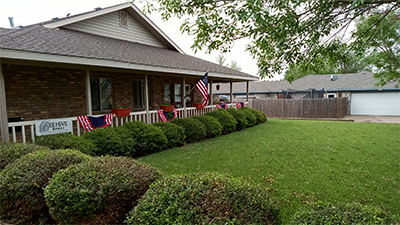
-
Circular or looped hallways
Dead ends can be complicated and upsetting for somebody with dementia. Loop designs let residents stroll, and stroll a lot if they wish, without getting caught or winding up in staff only spaces. -
Calm, controlled sensory environment
Background noise is a major trigger for agitation. Memory care units typically keep tvs off in public locations other than for structured activities and use softer lighting and soft colors. Some units develop "quiet spaces" for citizens who become overwhelmed. -
Memory hints and personalized doors
You might see shadow boxes with photos and small objects outside resident spaces, or doors painted different colors. These small touches serve as landmarks that help acknowledgment when space numbers no longer suggest much. -
Fully confined outdoor spaces
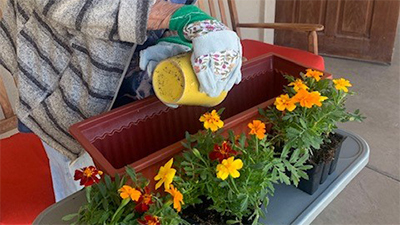
Lots of memory care programs have secure gardens or yards. Access to fresh air and greenery makes a visible difference in state of mind, however the location needs to be consisted of enough that a baffled resident can not stray the property or into traffic.
In assisted living, you might see a few of these features, particularly in communities that also operate memory care on another flooring. However, the developed environment is hardly ever as deeply customized to cognitive impairment.
When households tour, they often focus on décor and personal room size. Those matter less than the underlying question: "If my loved one misjudges danger, ignores signs, or walks away when distressed, how does this building react?"
Staffing and training: ratios, expectations, and reality
The distinction in staffing in between assisted living and memory care is one of the most practical dividing lines.
Assisted living generally expects that residents will request for help. Pull cables, call buttons, and scheduled visits develop a responsive model of care. Staff typically help with:
Medication passing at set times
Early morning and evening routines Set up showers Escort to meals for those who request itMemory care prepares for that homeowners may not plainly request for help, or might not know what aid they need. Personnel are anticipated to observe and analyze behavior, not just react to requests. This means:
More frequent check ins, often every hour
Constant guidance in common areas Personnel physically present and distributing, not simply waiting to be calledAs a result, memory care systems often have higher personnel to resident ratios than the assisted living side of the exact same community. You might see something like one direct care assistant for each 6 to 8 memory care locals during the day, compared with one for each 10 to 15 in assisted living, though precise numbers differ by state and company.
Training is another geological fault. In most states, anybody working in a memory care setting is required to receive extra education on dementia. The quality and depth of that training carries on a broad spectrum.
At the strong end, new staff get:
Several hours of disease specific education
Hands on coaching in communication strategies Guidance on responding to behaviors without utilizing physical force or unnecessary medication Continuous refreshers and case evaluatesAt the weak end, "training" may be a quick online module and a quick orientation shift.
When you tour, do not be reluctant to ask really direct concerns. The number of hours of dementia particular training do staff receive before working alone? How typically is that upgraded? Who does the teaching? Can you explain how staff handle a resident who declines care or ends up being aggressive?
Realistically, even good programs will have hectic days, personnel turnover, and periodic missed out on hints. The point is not perfection. The point is whether the structure's staffing design assumes that cognitive disability is central, not incidental.
Daily life: what feels different to locals and families
Families typically ask what life will "seem like" in memory care versus assisted living. The honest response is that it depends a lot on the particular community, but there are patterns worth understanding.
In assisted living, routines are more flexible and resident directed. Your father can pick to sleep late and avoid breakfast, or go out with you for lunch three days a week, and staff mainly adjust around that. Activities calendars tend to look like a mix of workout classes, crafts, games, trips, and home entertainment, with homeowners choosing in or out.
This versatility belongs to the appeal. For older adults who still arrange their own time however need physical assistance, assisted living can feel like a helpful apartment neighborhood rather than a facility.
In memory care, structure is more pronounced. Numerous programs follow a predictable daily rhythm:
Morning health, breakfast, and medication in relatively fast succession
Light workout or walking group Mid morning little group activity Lunch and rest period Afternoon sensory or reminiscence activities Early supper to relieve sundowning, then calmer evening timeResidents are typically guided into these activities rather of picking from a large menu. That is not patronizing; it is an attempt to lower choice overload and provide relaxing, purposeful engagement for brains that tire easily.
Families in some cases experience this structured method as over managing, specifically when they are accustomed to a more spontaneous relationship. It can feel unusual, for example, to be told that a loved one does better if visits are kept to specific times of day, or if you prevent long goodbyes.
The essential concern is whether the structure is utilized thoughtfully, tuned to each person's habits, or whether it has ended up being stiff and staff centered. Throughout a tour, take a look at citizens' faces. Do they appear engaged, at ease, or a minimum of calm? Or do most appear sedentary, parked in front of a tv, or wandering aimlessly?
Pay attention also to how staff speak about citizens. Language like "they are all on the very same schedule here" typically exposes more about staffing convenience than therapeutic care.
Cost, agreements, and what households typically miss
Cost seldom drives the decision between assisted living and memory care all by itself, but it heavily forms what is realistic.
In numerous markets, memory care expenses 20 to half more each month than assisted living in the same structure. The greater staffing ratios, training, and safety functions accumulate. A normal pattern, utilizing rough numbers, might be:
Assisted living: base rate of 3,500 to 5,500 USD monthly, plus tiers of care charges that can include 500 to 2,000 USD depending on just how much assistance is needed.
Memory care: bundled rates of 5,000 to 8,000 USD monthly, often with smaller include on charges for very high needs.These ranges change considerably by region, center, and personal versus non earnings ownership.
Families sometimes attempt to keep a loved one in assisted living longer because the memory care rates are substantially higher. This can work if the individual has moderate dementia and strong family support, however it brings 2 risks.
The first is security. Assisted living staff might not be geared up to manage roaming, exit seeking, or significant behavior modifications. If a resident ends up being a danger to themselves or others, the facility can provide a discharge notification on short notification, leaving the family scrambling.
The second is expense creep. Assisted living communities that utilize tiered pricing for care can end up being almost as expensive as memory care when you add regular checks, medication management, accompanying, and behavior support. I have seen households paying assisted living plus high tier care charges that together surpass the memory care rate 2 doors down.
It is worth asking for a composed breakdown of current charges and a quote of costs if care needs increase a couple of levels. That gives you a more practical basis for comparison.
Also consider what might BeeHive Homes of Clovis memory care help pay for care:
Long term care insurance coverage, which might have various everyday maximums or credentials for assisted living versus memory care
Veterans benefits, especially Aid and Presence, for qualifying veterans and spouses Medicaid waivers or state programs, which in some cases cover memory care but not all assisted living settings, and often have waitlists Short-term respite care stays, which can be a budget friendly method to check a setting before making an irreversible relocationA blunt but necessary point: by the time a person plainly needs memory care, numerous families' resources are already strained. Planning previously, even when everybody feels mainly okay, tends to maintain more options.
Where respite care fits into the picture
Respite care is a brief stay in a care setting so that the usual caretaker, frequently a partner or adult kid, can rest or travel or simply regroup.
Both assisted living and memory care communities may offer respite care stays, typically ranging from a few days to a few weeks. The resident moves into a supplied apartment or condo or room, receives the very same services as long term homeowners, then returns home at the end of the stay.
For dementia, respite care can serve three purposes.
First, it offers the primary caregiver a real break. Taking care of someone with memory loss, specifically when sleep is disrupted or behaviors are challenging, is soaking up work. A 2 week remain in a memory care program can avoid burnout and extend the time that home care is realistic.
Second, it lets you check whether an environment fits your loved one. If you presume that memory care may be required within the next year, a respite stay can be framed as a "trial run" or "short stay while your home is being repaired" instead of an irreversible relocation. Families often discover a lot from how their loved one adjusts, how staff interact, and whether the system seems like a great match.
Third, it can supply a much safer intermediate action after a hospitalization. A person hospitalized for delirium, falls, or infection might not be safely able to return straight home, however a nursing home may be more intensive than required. Memory care respite, if offered, can bridge that gap.
When thinking about respite, do not presume that the brief stay experience will perfectly match long term life, excellent or bad. Staff often focus additional attention on respite visitors, or alternatively, the person struggles more in the beginning and settles just after numerous weeks. Treat it as data, not a final verdict.
A quick comparison when you are on the fence
Families often reach a point where they understand "home alone" is no longer an alternative, however the choice in between assisted living and memory care is murky. These questions can clarify the picture:
-
Can my loved one securely leave the building alone?
If they are at real danger of getting lost, strolling into traffic, or being unable to find their way back, memory care's protected environment is normally safer. -
Does my loved one still dependably recognize and report pain, disease, or falls?
Assisted living assumes a baseline of self reporting. In memory care, staff anticipate to infer issues from habits and regular changes. -
Are choice making and judgement undamaged enough for several day-to-day choices?
If choosing clothes, meals, and activities is regularly overwhelming or causes distress, a more structured memory care day might fit better. -
How much habits change is present?
Hostility, frequent agitation, hallucinations, extreme fear, or nighttime wakefulness are very tough to handle in standard assisted living. -
Is the main issue physical support or cognitive safety?
If physical requirements dominate and thinking is primarily clear, assisted living is likely appropriate. If cognitive changes drive most risks, memory care usually matches better.
No single response determines the choice, however patterns emerge. When 3 or more of these concerns point securely toward cognitive vulnerability, I start to talk seriously with households about memory care, even if the person appears "too young" or "too active" in other ways.
Edge cases, gray zones, and when centers disagree
Not every situation falls neatly into the classifications I have actually just described. A few of the hardest choices arise in gray zones.
A very physically frail person with moderate dementia might be more secure in a nursing home or high support assisted living than in a vibrant, active memory care unit. Somebody with early start dementia in their 60s, still physically robust and socially engaged, might discover many memory care communities too sedate or geriatric in feel.
Facilities likewise have their own threat tolerance. One assisted living community might say, "We can handle your hubby's wandering with a high care level and additional checks," while another, down the roadway, will insist on memory care for the exact same behaviors.
What is occurring in those minutes is not simply medical; it is organizational. Staffing levels, unit design, and business policy all influence which citizens a center is comfortable serving. It is less about a universal guideline and more about whether the building and personnel are genuinely set up for the specific difficulties your loved one brings.
When you get contrasting assistance, ask each neighborhood to explain concretely what they would perform in specific scenarios. For instance:
"If my mother tried to leave the structure after dark, how would your personnel respond?"
"If my father refused a needed medication regularly, what would be your strategy?" 
Their responses will expose far more than general statements about being "memory care capable."
How to approach the decision with your family
Beyond the medical and logistical layers, this is a psychological decision. It touches identity, promises made, and fears about completion of life.
One method to progress without getting paralyzed is to frame the decision as the next best action, not the final one.
You are not choosing where your loved one will live for the rest of their life in every scenario, just where they will get the best and most gentle take care of the current phase of disease. Needs will change. A move from assisted living to memory care later on is not a failure of planning; it is often a natural progression.
Involving the individual with dementia in the discussion, to the extent they can meaningfully participate, is also crucial. You might not be able to present a full menu of options, but you can honor preferences. Some people strongly prefer a smaller, home like memory care home, even if it is farther from relatives. Others value being in a larger school where numerous levels of senior care are available.
Families in some cases underestimate the impact on the much healthier spouse or caregiver. A choice for memory care may extend their health and capability to be a consistent, caring presence. I have actually seen caregivers in their 70s and 80s gain back typical sleep, stabilize their own medical problems, and reconnect with their partner in a new but sustainable method after a relocate to memory care.
The hardest concerns frequently have no ideal answer, only much better and even worse trade offs. When uncertain, prioritize security and self-respect, because order. A gorgeous house is useless if the individual is at day-to-day danger of harm. At the very same time, a safe environment that overlooks individuality and lowers a person to a diagnosis is unsatisfactory either.
Aim for a location where your loved one is viewed as an entire individual, past and present, with a history and preferences that still matter.
Caring for someone with amnesia or increasing frailty is demanding work. Whether you pick assisted living, memory care, or interim respite care, you are not stepping away from your function. You are adding more individuals to the team.
Used thoughtfully, these types of elderly care are tools. The right one at the correct time can secure security, maintain relationships, and offer your loved one a step of convenience and self-respect through a difficult chapter of life.
BeeHive Homes of Clovis provides assisted living care
BeeHive Homes of Clovis provides memory care services
BeeHive Homes of Clovis provides respite care services
BeeHive Homes of Clovis supports assistance with bathing and grooming
BeeHive Homes of Clovis offers private bedrooms with private bathrooms
BeeHive Homes of Clovis provides medication monitoring and documentation
BeeHive Homes of Clovis serves dietitian-approved meals
BeeHive Homes of Clovis provides housekeeping services
BeeHive Homes of Clovis provides laundry services
BeeHive Homes of Clovis offers community dining and social engagement activities
BeeHive Homes of Clovis features life enrichment activities
BeeHive Homes of Clovis supports personal care assistance during meals and daily routines
BeeHive Homes of Clovis promotes frequent physical and mental exercise opportunities
BeeHive Homes of Clovis provides a home-like residential environment
BeeHive Homes of Clovis creates customized care plans as residents’ needs change
BeeHive Homes of Clovis assesses individual resident care needs
BeeHive Homes of Clovis accepts private pay and long-term care insurance
BeeHive Homes of Clovis assists qualified veterans with Aid and Attendance benefits
BeeHive Homes of Clovis encourages meaningful resident-to-staff relationships
BeeHive Homes of Clovis delivers compassionate, attentive senior care focused on dignity and comfort
BeeHive Homes of Clovis has a phone number of (505) 591-7025
BeeHive Homes of Clovis has an address of 2305 N Norris St, Clovis, NM 88101
BeeHive Homes of Clovis has a website https://beehivehomes.com/locations/clovis/
BeeHive Homes of Clovis has Google Maps listing https://maps.app.goo.gl/SMhM3zbKaKgR1UAX6
BeeHive Homes of Clovis has TikTok page https://tiktok.com/@beehivehomes_clovis
BeeHive Homes of Clovis has Facebook page https://www.facebook.com/beehiveclovis
BeeHive Homes of Clovis has Instagram page https://www.instagram.com/beehivehomesclovis/
BeeHive Homes of Clovis has an YouTube page https://www.youtube.com/@WelcomeHomeBeeHiveHomes
BeeHive Homes of Clovis won Top Assisted Living Homes 2025
BeeHive Homes of Clovis earned Best Customer Senior Service Award 2024
BeeHive Homes of Clovis placed 1st for Senior Living Communities 2025
People Also Ask about BeeHive Homes of Clovis
What is BeeHive Homes of Clovis Living monthly room rate?
The rate depends on the level of care that is needed. We do a pre-admission evaluation for each resident to determine the level of care needed. The monthly rate is based on this evaluation. There are no hidden costs or fees
Can residents stay in BeeHive Homes until the end of their life?
Usually yes. There are exceptions, such as when there are safety issues with the resident, or they need 24 hour skilled nursing services
Do we have a nurse on staff?
No, but each BeeHive Home has a consulting Nurse available 24 – 7. if nursing services are needed, a doctor can order home health to come into the home
What are BeeHive Homes’ visiting hours?
Visiting hours are adjusted to accommodate the families and the resident’s needs… just not too early or too late
Do we have couple’s rooms available?
Yes, each home has rooms designed to accommodate couples. Please ask about the availability of these rooms
Where is BeeHive Homes of Clovis located?
BeeHive Homes of Clovis is conveniently located at 2305 N Norris St, Clovis, NM 88101. You can easily find directions on Google Maps or call at (505) 591-7025 Monday through Sunday 9:00am to 5:00pm
How can I contact BeeHive Homes of Clovis?
You can contact BeeHive Homes of Clovis by phone at: (505) 591-7025, visit their website at https://beehivehomes.com/locations/clovis/ or connect on social media via TikTok Facebook or YouTube
Take a drive to Cotton Patch Cafe. Cotton Patch Café serves homestyle comfort food suitable for assisted living, memory care, senior care, elderly care, and respite care family meals.